
Indian equity benchmark indices Sensex and Nifty tumbled over 1 per cent for the third consecutive day, driven by a sharp rally in crude oil prices, massive selling in IT stocks, and unabated foreign fund outflows amid ongoing geopolitical tensions in the Middle East.

Indian benchmark indices Sensex and Nifty experienced a sharp decline in early trading due to escalating tensions in the Middle East, driving crude oil prices higher. Global market bearishness and foreign fund outflows further contributed to investor unease.

Saudi Arabia and the UAE are actively pushing Trump to take the war to its bitter finish and 'erase' Iran's presence in the geopolitics of the region. Simply put, the two most powerful Sunni Arab oligarchies are on the same page as Israel. Such interference increases the risk of a breakdown in dialogue between the US and Iran, points out Ambassador M K Bhadrakumar.

LG Electronics India made a dazzling market debut on Tuesday, ending 48 per cent higher than its issue price and surpassing its South Korean parent in market value.
The Indian rupee saw a significant appreciation against the US dollar following President Trump's suspension of military strikes against Iran and the Reserve Bank of India's decision to maintain its key interest rate. Market sentiment was further buoyed by positive comments from the RBI regarding the health of the banking sector.

Base revisions are technical exercises, but history shows they can significantly reshape the narrative around India's growth performance.

Stock market regulator Sebi's board on Friday cleared significant reforms, focusing on IPO regulations, simplified entry for foreign investors, and a new framework for anchor investors in public issues.

The exchanges have put in place systems which generate alerts on company-specific news in the media. And, then follow up with companies to verify the news.

Indian equity benchmarks, Sensex and Nifty, ended lower after a spectacular rally, with the Sensex tumbling 931 points, as renewed tensions in West Asia, particularly the risk to the ceasefire deal after Iran closed the Strait of Hormuz, dampened investor optimism.

The Multi-Commodity Exchange faced disruptions to operations due to a technical issue on Tuesday, forcing it to commence trading over 4 hours late and shift operations to its disaster recovery site. The commodities bourse said that all its trading systems are now functioning normally and an investigation into the issue has been initiated on priority.

Indian stock markets extended their gains for a third consecutive day, with the Sensex climbing 753 points and the Nifty closing above 24,550, driven by a drop in crude oil prices and optimism surrounding potential peace talks between Iran and the US.

Capital markets regulator Sebi on Tuesday decided to gradually phase out buyback of shares by companies through the stock exchange route to address the drawbacks associated with the existing mechanism. Sebi chairperson Madhabi Puri Buch said the regulator has chosen the tender offer route for share buyback as the present mode is vulnerable to favouritism. "This is a glide path and will lead to the phasing out of the present buyback mode (through stock exchange route)," she told reporters after its board meeting in Mumbai.

Indian benchmark equity indices experienced a significant downturn, with the Sensex plummeting over 800 points and the Nifty falling sharply, driven by rising crude oil prices, geopolitical tensions, and foreign capital outflows.

The post-Covid euphoria surrounding direct equity investing has ebbed in 2025. Individual investors have turned net sellers in the domestic equity market, pulling out about 8,461 crore so far this year - a sharp reversal from the record purchases seen in 2024, according to a report by the National Stock Exchange of India (NSE).

The iconic Bombay Stock Exchange (BSE) building in south Mumbai received a bomb threat email, which turned out to be a hoax after a search of the premises, police said on Tuesday.

From the 30-Sensex firms, InterGlobe Aviation, Sun Pharma, Asian Paints, Reliance Industries, Hindustan Unilever, and Tata Steel were among the biggest laggards. However, Trent, UltraTech Cement, Maruti, and Power Grid were among the gainers.

They don't just want better returns -- they're looking for global opportunities, more variety and smarter ways to grow their money, says Soubho Moulik, CEO, Appreciate.

Equity benchmark indices Sensex and Nifty experienced a significant decline, primarily driven by a selloff in IT stocks due to concerns about AI disruption and renewed worries over global trade.

The Indian rupee weakened against the US dollar due to sustained foreign fund outflows and uncertainties in West Asia, although lower crude oil prices and a positive opening in domestic equity markets limited the losses.

The Indian rupee weakened against the US dollar due to a strengthening dollar, high crude oil prices, and foreign fund outflows amid geopolitical uncertainties.
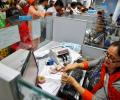
Led by the country's biggest lender State Bank of India (SBI), public sector banks logged a record cumulative profit of Rs 52,603 crore in the third quarter of the current fiscal, reflecting an 18 per cent year-on-year growth.

A record amount of pension money may be finding its way into the stock market, if buying figures in the National Stock Exchange (NSE) data are any indication. Category inflows touched Rs 37,409 crore for the three months ending September 2025, shows an analysis of NSE data.

Benchmark equity indices Sensex and Nifty extended their gains for the third straight session on Wednesday, driven by last-hour buying in bank, metal, and FMCG shares.
Indian equity markets closed higher, driven by gains in PSU bank, auto, and financial stocks, following the US Supreme Court's decision on tariffs. Sensex climbed 479.95 points to 83,294.66, and Nifty advanced 141.75 points to 25,713.

SREI Infrastructure Finance Limited, one of the leading infrastructure project finance and infrastructure equipment finance company in India, got listed in the LSE on Thursday.

Unless the primary market momentum slows, smallcap stocks will stay subdued.

From the Sensex firms, Reliance Industries climbed 3.52 per cent after the firm on Friday reported a 9.6 per cent year-on-year rise in net profit for the September quarter, driven by strong performance in its consumer-facing retail and telecom businesses and a recovery in its core oil-to-chemicals segment. Bajaj Finserv, Axis Bank, State Bank of India, Tata Consultancy Services, Titan and Bharti Airtel were also among the gainers. However, ICICI Bank, Mahindra & Mahindra, Eternal, Adani Ports and Power Grid were among the laggards.

'Allocating 5 to 10 per cent of one's portfolio and staying disciplined through market cycles helps in having a positive investment experience.'

The Mumbai Bench of the National Company Law Tribunal (NCLT) on Tuesday gave its approval to Vedanta Limited's demerger proposal, clearing the way for the group to reorganise its operations into five distinct, sector-specific entities.

'MIIs or market intermediaries shall enter into an appropriate agreement with entities with whom they intend to share real-time price data.'
Tech Mahindra, Adani Ports, HCL Tech, Tata Consultancy Services and Bajaj Finserv were also among the gainers. However, Trent, Eternal, UltraTech Cement and NTPC were among the laggards.
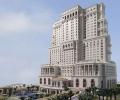
Shares of ITC Hotels Ltd, the demerged hotels business of FMCG conglomerate ITC Ltd, listed on the stock exchanges on Wednesday. The stock listed at Rs 188 on the BSE, while on the NSE it began the trade at Rs 180. Later the stock declined 5 per cent to Rs 178.60 on the BSE.

FSN E-Commerce Ventures, the parent company of Nykaa, anticipates its consolidated net revenue for Q4 FY26 to achieve high 20 per cent year-on-year growth, marking its strongest performance in 12 quarters, fueled by accelerated growth in both its fashion and beauty verticals.

From the Sensex firms, Adani Ports, NTPC, Power Grid, HCL Tech, Tata Steel, Sun Pharma, Trent and Asian Paints were among the major gainers. However, Bharat Electronics, Eternal, Mahindra & Mahindra and Maruti were among the laggards.

Stock exchanges are expanding the buffet of index derivatives even as the number of stocks permitted to trade in this space, generating an average daily turnover of Rs 450 trillion, is shrinking. This week, the National Stock Exchange (NSE) started issuing futures and options (F&O) contracts based on the Nifty Next 50 Index, bringing the total count of index derivatives to five.

Marico has entered into a definitive agreement with PVR INOX to buy its 93.27 per cent stake in Zea Maize Private Limited (ZMPL), which owns the gourmet popcorn brand 4700BC, in an all-cash transaction worth Rs 226.8 crore.

Mammootty's greatness lies not in hiding his flaws, but in turning them into his most powerful acting tools, observes Sreehari Nair.

In the mid-1990s, when the shares of listed companies first began to be held in electronic form, they accounted for less than 1 per cent of the stocks bought and sold on the stock exchanges. This climbed to 99.5 per cent by 2001.

Bhansali Productions will retain creative control, and Sanjay Leela Bhansali, founder, Bhansali Productions, said that for him, powerful and meaningful cinema requires time, trust, and a deep respect for the process, which the company was able to align with Saregama India.

The Securities and Exchange Board of India (Sebi) on Wednesday overhauled the cost framework for the 80 trillion domestic mutual fund (MF) industry, introducing a simplified structure aimed at improving transparency for investors while balancing the impact on asset managers.
